In pipeline engineering, flange codes are far more than mere abbreviations; they directly determine a system's pressure rating, installation complexity, and overall cost. To achieve precise selection, one must first deconstruct the "engineering logic" embedded within these core codes.
1. The "Welded" Category: Balancing Strength and Process
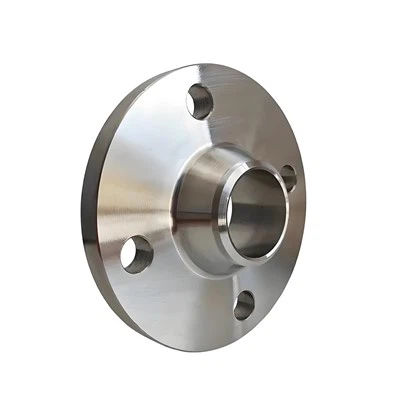
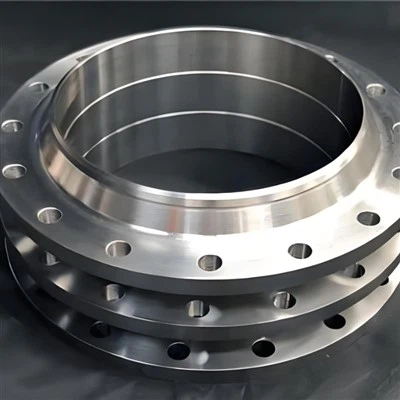
WN (Weld Neck): The "Tough Guy" of the Piping World
Characteristics: Features a distinctive, long tapered neck design.
Practical Advice: This represents the highest specification among flanges. By being butt-welded to the pipe to form a seamless unit, it excels at absorbing pressure fluctuations and thermal stresses. If your project involves high pressure, extreme temperatures, or flammable/explosive media, the WN flange is the definitive choice.
SO (Slip-On): The Cost-Effective Choice
Characteristics: Features a shorter neck than the WN flange, yet offers greater strength than the PL flange.
Practical Advice: This serves as an upgraded version of the PL flange, offering more stable pressure-bearing performance. If you find a standard flat-plate flange (PL) to be insufficiently robust, but a butt-weld flange (WN) would exceed your budget, the SO flange typically offers the optimal balance between cost and safety.
PL (Plate Flange): The Basic, All-Purpose "Workhorse"
Characteristics: A simple flat disk with no neck.
Practical Advice: This is the most widely used type in engineering projects. While affordable and easy to use, it is recommended only for environments involving ambient temperatures, low pressures, and stable media (such as compressed air or standard water systems).
SW (Socket Weld): The Savior for Small-Bore Piping
Characteristics: Features an internal bore with a distinct "shoulder" or step.
Practical Advice: Specifically designed to resolve the difficulties associated with butt-welding small-bore pipes (under 2 inches or DN50). The pipe is simply inserted into the socket and welded in place, allowing for rapid positioning and high installation efficiency.
2. The "Non-Welded & Special Function" Category
Th (Threaded Flange): The Ideal Tool for "No-Hot-Work" Installation
Advantages: Requires no welding, making it suitable for scenarios where open flames are strictly prohibited or where welding is impractical (e.g., on galvanized piping).
Contraindications: Since its sealing integrity relies entirely on the threaded connection, it must *never* be used in pipelines operating above 260°C or subject to severe vibration, as such conditions make leakage highly probable.
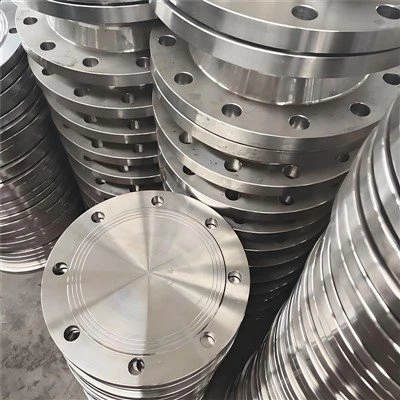
BL (Blind Flange): The "Terminus" of the Pipeline
Function: Also commonly referred to as a "blind flange," it is used to completely seal off the end of a pipe or to serve as a temporary shut-off point.
3. Beyond the Code: Three Additional Points to Consider
Once you have identified the appropriate code, your selection must still pass through this additional "screening process":
Based on Connection Logic: Consider whether a rigid, integral connection is required, or if a loose-ring (lap joint) connection is preferable for ease of disassembly and cleaning.
Based on Application: Clarify whether the flange is intended for mating with a pressure vessel or for use in a standard fluid transport pipeline.
Based on Sealing Face Compatibility: Do not overlook the sealing face codes that follow the main flange code (e.g., RF for Raised Face, FM for Male-and-Female Face, etc.); these specifications determine the appropriate gasket selection and the required sealing class.
Engineering Tip: When selecting components, there is no absolute "good" or "bad"-only the "best fit." Specifying a high-standard component for a low-duty application is safe but wasteful of budget, whereas using a low-standard component for a high-duty application poses a significant safety hazard. The purpose of understanding these codes is to identify that precise balance point between safety and cost-efficiency.