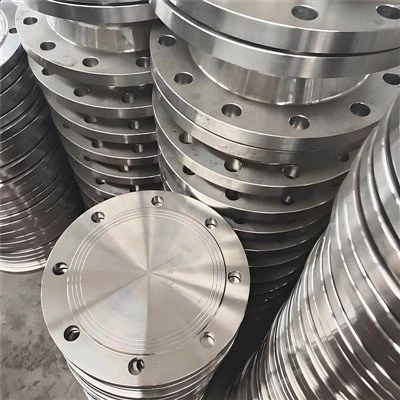
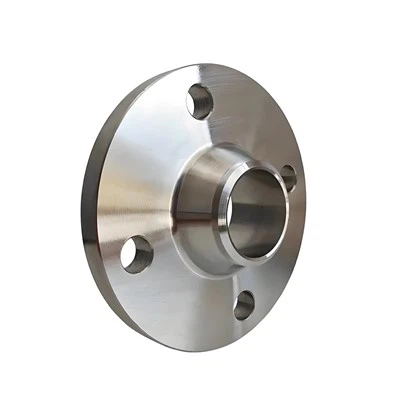
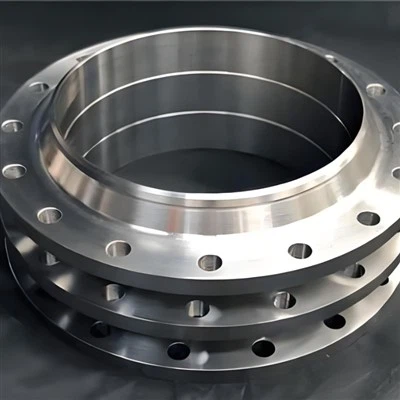
A plate flange for welding has no forged hub; the load path runs through the flat annular body and the weld that connects it to the pipe or duct. Production therefore begins with plate traceability and a cutting plan that controls outside diameter, bore, hole circle, and material yield. Holes may be drilled or machined after profile cutting, and the sealing area is finished to the required condition. Before welding, installers check fit-up, squareness, gap, and distortion allowance so that the flange face remains aligned with the mating component after the joint cools.
Product Parameters
|
Item |
Specification |
|
Material Options |
Carbon steel; stainless steel; approved alloy plate |
|
Manufacturing |
Plate cutting, drilling, machining, and finishing |
|
Pipe Connection |
Welded connection |
|
Flange Connection |
Bolts, nuts, and gasket |
|
Shape |
Circular or drawing-based profile |
|
Bore |
According to the connecting pipe dimensions |
|
Bolt Pattern |
Standard or customized hole arrangement |
|
Surface Options |
Bare; painted; galvanized; anti-corrosion coating |
|
Customization |
Diameter, thickness, bore, face, holes, and finish |
Components

Annular plate: carries bolt load around the central opening.
Pipe bore: provides the fit-up location for welding.
Hole circle: aligns fasteners with the mating component.
Sealing area: supports the selected gasket surface.
Weld perimeter: joins the flat body to the pipe or fabricated nozzle.
Main Applications
The plate flange for welding is suitable for large-diameter water and drainage lines.
Low-pressure utility and ventilation systems.
Tank, vessel, and equipment connections.
Fire-water and municipal pipework.
Fabricated pipe spools.
Drawing-controlled replacement flanges.
Manufacturing and Ordering
The purchase description for a plate flange for welding should include plate grade, thickness, outside diameter, bore, hole quantity, hole diameter, pitch circle, face finish, welding detail, tolerances, coating, and quantity. For large diameters, confirm plate availability, cutting method, handling points, and a distortion-control plan before fabrication begins.


FAQ
Q: Which plate information is essential?
A: State the material specification, thickness, traceability requirement, and any directional or testing condition.
Q: How is post-weld distortion controlled?
A: Use balanced welding sequences, adequate support, suitable heat input, and dimensional checks after cooling.
Q: Can the hole pattern follow an existing joint?
A: Yes. A verified mating template or complete dimensional drawing can define the required pattern.
Hot Tags: plate flange for welding, China plate flange for welding manufacturers, suppliers, factory, 4 weld neck flange, bolted flange, plumbing flange, pressure flange, slip on flange pipe welding, weldneck flange