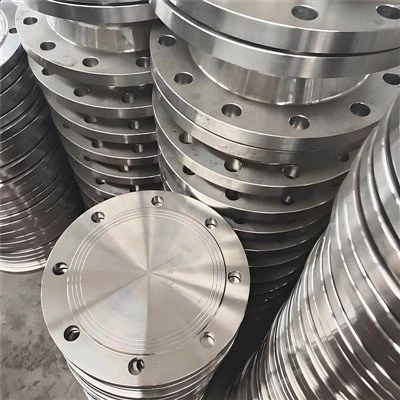
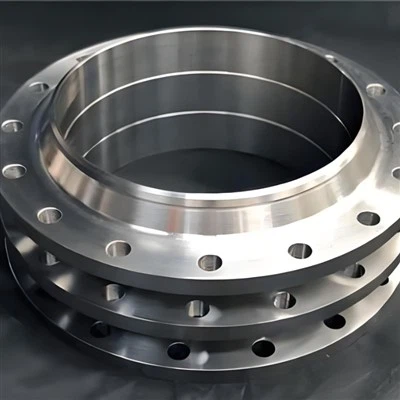
Professional Raised Face Slip-On (RF SO) Flanges designed for reliable pipe connections in medium to low-pressure applications. Engineered with a raised sealing face and slide-over hub for easy alignment and double-sided welding. They offer superior sealing performance and cost-effective installation across chemical, oil, and water treatment pipelines.
Products Specification
|
Parameter |
Specification |
|
Product Name |
Raised Face Slip On Flange (RF SO) |
|
Governing Standard |
ASME B16.5 (B16.47 on request for large diameters) |
|
Size Range |
NPS 1/2 – 24 (DN15 – DN600) |
|
Pressure Class |
Class 150 / 300 / 400 / 600 |
|
Sealing Face |
Raised face - 1/16 in. (Class 150/300), 1/4 in. (Class 400/600) |
|
Face Finish |
125–250 µin Ra (3.2–6.3 µm), serrated |
|
Materials |
A105, A350 LF2, A182 F304/F304L, F316/F316L |
|
Gasket |
Non-metallic per ASME B16.21 or spiral-wound per B16.20 |
Sealing Design
How the Raised Face Works
Easy Alignment
(Slide-over Design)
Slips easily over the pipe, allowing effortless rotation and positioning for fast bolt-hole alignment.
Dual-Weld Integrity
Requires fillet welding both inside and outside the flange hub to ensure a leak-proof, high-strength connection.
High-Sealing RF Surface
The elevated raised face concentrates bolt pressure on the gasket, delivering exceptional sealing performance in medium/low pressure systems.
Material Selection by Service
A105 - standard carbon steel for general Class 150–600 service.
A350 LF2 - low-temperature duty down to −50 °F.
A182 F304 / F304L - stainless for corrosive and CIP lines where carbon steel would pit.
A182 F316 / F316L - chloride-bearing streams, marine and food-plant environments; F316L resists sensitization in welded assemblies.
Match the grade to the minimum design temperature and the process corrosivity; the mill test certificate confirms grade and heat.


Products Applications
The raised face slip on flange is the standard pick for Class 150–600 plant utility service:
Cooling water and utility circuits
condenser lines, jacket water, and general plant loops at Class 150.
Compressed air and steam headers
Branch lines and header spools at Class 150/300.
Chemical transfer piping
Stainless RF slip-ons on dilute chemical and CIP lines in processing plants.
Water treatment and food plants
Carbon or stainless slip-ons on filter skids, pump manifolds, and process skids.
FAQ
Q: What is the difference between a Slip-On Flange and a Weld Neck Flange?
A: Connection & Installation: A Slip-On (SO) flange slips over the pipe and is secured with two fillet welds (inside and outside), making bolt-hole alignment fast and easy. A Weld Neck (WN) flange features a tapered hub that requires a butt weld to the pipe end, requiring precise alignment.
Pressure & Strength: WN flanges distribute stress effectively through their tapered neck, making them superior for high-pressure, high-temperature, or extreme loading conditions. SO flanges have higher stress concentration and are ideal for low-to-medium pressure systems (e.g., Class 150/300).
Cost: SO flanges are cheaper to purchase and require less precise pipe cutting, offering a 20%–30% savings on total material and installation costs.
Q: Why choose a Raised Face (RF) over a Flat Face (FF) on a Slip-On Flange?
A: Superior Sealing Performance: The Raised Face (RF) concentrates the bolt clamping force onto a smaller gasket area, generating a much higher gasket seating stress for a tighter, leak-proof seal.
Material Compatibility: RF flanges are standard for steel, stainless steel, and alloy piping systems in chemical, oil, and gas applications. Flat Face (FF) flanges are primarily used when mating with brittle cast-iron pumps, valves, or equipment to prevent cracking when tightening bolts.
Q: Does a raised face slip on flange require welding on both the inside and outside?
A: Standard Requirement: Yes. According to major piping codes (such as ASME B31.3), a Slip-On flange must be fillet welded both externally (at the hub base) and internally (near the pipe end).
Purpose: The external weld provides structural mechanical strength, while the internal weld seals the connection and prevents crevice corrosion between the inner pipe wall and the flange bore.
Hot Tags: raised face slip on flange, China raised face slip on flange manufacturers, suppliers, factory, flange face, flange stainless, flat flange, pn16 weld neck flange, solid flange, Ss Weld Neck Flange