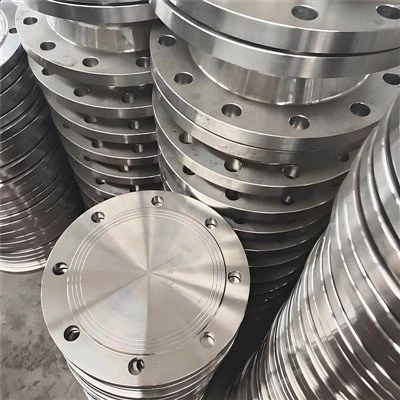
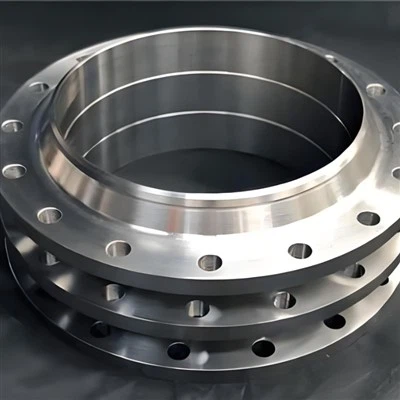
The stainless steel reducing flange should be treated as a size-transition component, not simply as a standard flange with a smaller hole. The larger side must match the mating flange geometry, pressure class, facing, and gasket, while the reduced side must suit the smaller pipe outside diameter, wall thickness, and joining method. The transition contour influences flow disturbance and available wall section, so its dimensions need to follow an approved standard or drawing. Stainless grades are selected for the process fluid and cleaning environment, with welding procedure and post-fabrication surface treatment considered at the same time.
Product Parameters
|
Item |
Specification |
|
Material Options |
304; 304L; 316; 316L stainless steel |
|
Configuration |
Larger flange connection with reduced central bore |
|
Connection |
Bolted flange joint with pipe-side welding |
|
Sealing |
Gasket selected according to flange face and medium |
|
Dimensional Basis |
Applicable standard or confirmed project drawing |
|
Bore Size |
According to the smaller connecting pipe |
|
Bolt Pattern |
According to the mating flange |
|
Surface |
Machined sealing face; cleaned stainless steel surface |
|
Customization |
Grade, size combination, thickness, face, and hole pattern |
Components
Large-side connection: matches the mating flange class and facing.
Transition bore: changes the flow passage to the smaller nominal size.
Pipe end: receives the specified butt-weld, socket, or other preparation.
Gasket face: provides the sealing surface for the bolted joint.
Bolt pattern: transfers assembly load to the mating connection.
Main Applications
The stainless steel reducing flange is suitable for corrosive water transfer and treatment skids.
Chemical dosing and process branches.
Sanitary or clean-service size changes.
Pump suction and discharge transitions.
Marine utility lines.
Compact equipment nozzle connections.
Selection and Installation

When ordering a stainless steel reducing flange, state the large flange size first and the smaller pipe size second. Add the rating, dimensional standard, stainless grade, schedule, face type, gasket basis, pipe-end preparation, quantity, and inspection scope. For welded service, confirm whether solution treatment, pickling, passivation, or weld documentation is required after fabrication.
FAQ
Q: Which two sizes must appear on the order?
A: Identify the mating-flange nominal size and the smaller connected pipe size.
Q: What determines the stainless grade?
A: Consider the fluid chemistry, chlorides, cleaning method, temperature, and welding requirements.
Q: Why is the transition drawing important?
A: It defines the bore contour, available wall section, end preparation, and dimensional relationship between both sizes.
Hot Tags: stainless steel reducing flange, China stainless steel reducing flange manufacturers, suppliers, factory, 4 inch weld neck flange, flange face, flange welding neck, ss flanges, stainless steel weld flanges, weldneck flange