Selecting the correct industrial flange is a critical engineering decision that dictates the mechanical integrity, pressure containment capability, and long-term service life of piping systems. Whether deployed in petrochemical processing plants, offshore oil and gas facilities, power generation stations, or industrial utility networks, mismatching connection geometry, pressure ratings, or metallurgical grades can lead to catastrophic joint leakage and costly unplanned downtime.
Core Industrial Flange Types & Application Scope
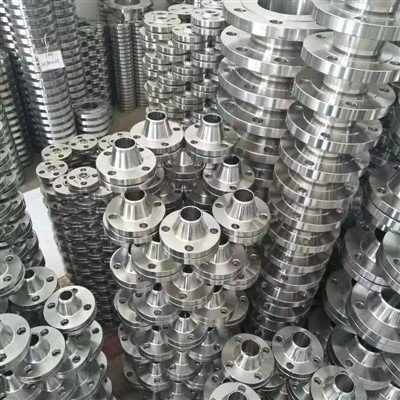
Weld Neck Flanges (WNF) & High-Pressure Series
Weld Neck Flanges feature a tapered conical hub that gradually transfers mechanical stress from the flange ring into the pipe wall, effectively minimizing stress concentration at the neck base. Attached via a full-penetration circumferential butt weld, they offer unsurpassed resistance to dishing, thermal expansion, severe cyclic bending, and internal pressure surges.
• Primary Applications: High-pressure steam lines, hydrocarbon processing, subsea pipelines, and critical process infrastructure.
• Manufacturing Envelope: Carbon steel (ASTM A105 / A105N), austenitic stainless steel (ASTM A182 F304/F304L, F316/F316L), and alloy steel forgings rated from Class 150 up to Class 2500 (PN10 to PN420 / EN 1092-1 Type 11).
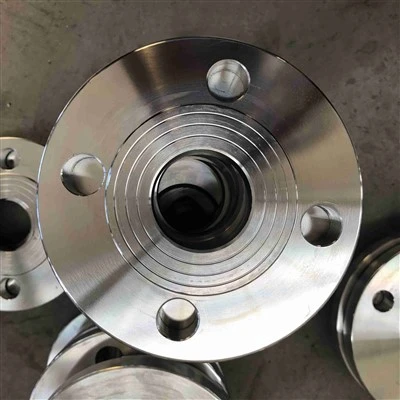
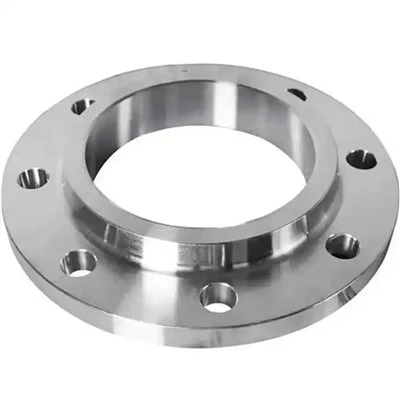
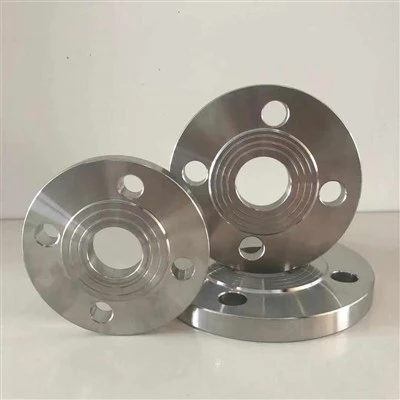
Slip-On (SO) & Plate Flanges (PL) - Standard & Medium Pressure
Slip-On Flanges slide over the outer diameter of the connecting pipe and are secured via dual fillet welds (one external hub weld and one internal bore weld). While their static bursting strength approaches that of a weld neck flange, their fatigue life under cyclic bending is approximately one-third. Plate Flanges (cut from plate or forged rings without a hub) represent the most cost-effective connection method for low-to-medium pressure utilities.
• Standard Compliance: Fully compliant with ASME B16.5 Slip-On specifications, EN 1092-1 Type 01 (Plate Flanges), and EN 1092-1 Type 12 (Hubbed Slip-On Flanges).
• Primary Applications: Cooling water loops, low-pressure compressed air, HVAC infrastructure, and general utility flowlines.
Blind Flanges (BL) - Pipeline Isolation & Hydrostatic Testing
Blind Flanges are solid forged discs manufactured without a central bore, utilized to positively seal the terminal ends of piping headers, pressure vessels, and valve manifolds. Because total fluid pressure acts directly against the solid center, blind flanges endure the highest center bending stress among all flange categories at equivalent pressure ratings. They serve as essential inspection cleanout ports and pressure boundaries during hydrostatic testing.
• Standard Compliance: ASME B16.5 Blind Flanges (Class 150–2500) and EN 1092-1 Type 05 (PN6–PN400).
Large-Diameter & Special-Shaped Custom Flanges
For pipelines exceeding NPS 24 (DN 600), standard ASME B16.5 dimensions no longer apply. Large-Diameter Flanges are produced in accordance with ASME B16.47 Series A (MSS SP-44, heavy-duty) or Series B (API 605, compact design), as well as EN 1092-1 large-bore dimensions up to DN 3000 (120 inches).
• Custom & Special-Shaped Profiles: For rectangular wind-tunnel manifolds, heat exchanger tubesheets, and specialized vessel nozzles, Guoneng Pipe provides precision CNC machining based on customer CAD/SolidWorks engineering drawings.
International Flange Standards & Pressure Rating System
Global piping projects primarily operate under two major dimensional and pressure classification systems: the American ASME/ANSI standard and the European EN/DIN standard. The matrix below outlines standard structural designations and their exact pressure class mappings:
|
International Standard |
Designation / Type Code |
Structural Flange Type |
Available Pressure Ratings |
|
ASME B16.5 / B16.47 |
WNF (Welding Neck) |
Weld Neck Flange |
Class 150, 300, 600, 900, 1500, 2500 |
|
ASME B16.5 |
SO (Slip-On) |
Slip-On Flange |
Class 150, Class 300, Class 600 |
|
EN 1092-1 |
Type 01 |
Plate Flange (Slip-On Plate) |
PN6, PN10, PN16, PN25, PN40 |
|
ASME B16.5 |
BL (Blind) |
Blind Flange |
Class 150 to Class 2500 |
|
ASME Sec. VIII Div. 1 |
Custom Engineered |
Pressure Vessel Flange |
Custom bolt pattern & dimensions per engineering drawings |
Engineering Note on Gasket Facing: Standard Raised Face (RF) flanges conform to ASME B16.5 heights: 2 mm (1/16") for Class 150/300 and 7 mm (1/4") for Class 600 and above, matching EN 1092-1 Type B. Ring Type Joint (RTJ) grooves strictly comply with ASME B16.5 and API 6A dimensions for high-pressure metallic ring gaskets.
Metallurgy & Material Selection
Selecting the appropriate material grade ensures mechanical stability across operating temperatures and prevents severe corrosion cracking. Below is the standard cross-reference matrix matching ASTM/ASME and European EN/DIN grades:
|
Material Category |
ASTM / ASME Grade |
EN / DIN Material Code |
Recommended Service & Temperature Range |
|
Carbon Steel |
ASTM A105 / A105N |
1.0460 (C22.8) |
Steam, compressed air, refined hydrocarbons, standard utility systems (-29°C to 425°C). |
|
Austenitic & Duplex Stainless Steel |
ASTM A182 F304 / F304L |
1.4301 / 1.4307 |
Marine saltwater, food processing, nitric/sulfuric acid environments, cryogenic LNG lines. |
|
High-Grade Alloy Steel (Cr-Mo) |
ASTM A182 F11 / F22 |
1.7335 (13CrMo4-5) |
Power generation superheaters, hydrocracking units, and high-pressure sour gas (H2S). |
Engineering Procurement Checklist: Preventing Costly Field Misfits
When issuing Requests for Quotation (RFQs) to manufacturing mills, specifying only the nominal pipe size is the primary cause of delivery delays and dimensional incompatibility. Ensure every flange purchase requisition includes the following four technical specifications:
1. Complete Dimensional Standard & Rating: Specify exact standard and rating, e.g., 'ASME B16.5 NPS 8 Class 300 WNF SCH 40 RF' or 'EN 1092-1 DN 200 PN 40 Type 11 Type B'.
2. Pipe Schedule / Flange Bore Matching: For Weld Neck flanges, the internal bore must precisely match the mating pipe's inside diameter (SCH 40, SCH 80, SCH 160, SCH XXS) to prevent internal turbulence and erosion.
3. Gasket Facing Roughness: Specify serrated concentric/spiral finish (Ra 3.2 – 6.3 µm / 125 – 250 µin) for spiral wound gaskets, or smooth finish (Ra 1.6 – 3.2 µm) for elastomeric O-rings.
4. Testing & Certification Protocols: Require Mill Test Certificates conforming to EN 10204 Type 3.1, plus mandatory NDT (Ultrasonic Testing, Magnetic Particle Testing, and PMI spectrographic analysis).
Technical Manufacturing & Supply with Hebei Guoneng Pipe Industry
As an integrated manufacturer of precision forged and machined piping components, Hebei Guoneng Pipe Industry Co., Ltd. operates heavy hydraulic forging presses, automated heat-treatment furnaces, and high-precision CNC machining centers. We serve global energy and engineering contractors with full compliance to international specifications:
• Manufacturing Range: DN 15 to DN 3000 (NPS 1/2" to 120"); Pressure classes PN 2.5 to PN 420 (Class 150 to Class 2500).
• Comprehensive Portfolio: Weld Neck, Slip-On, Plate, Blind, High-Pressure, Large-Diameter (ASME B16.47), and customized non-standard forgings.
• Quality & Traceability: 100% heat-number traceability, EN 10204 3.1 MTC issued with every consignment, and third-party inspection (SGS, BV, TÜV) welcoming.