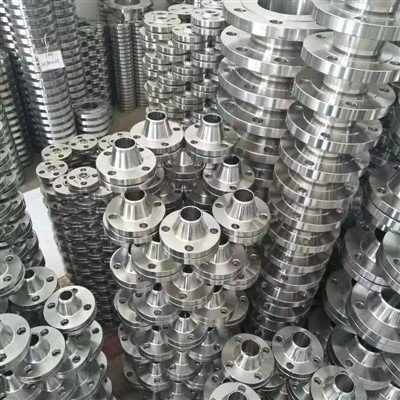
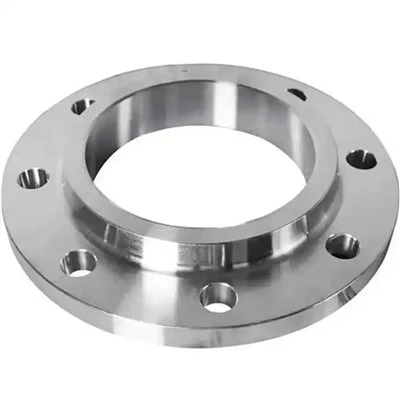
In the design of modern industrial fluid networks, choosing the right pipe connector directly impacts both the initial installation budget and the long-term safety of the facility. Among the various piping components defined by ASME B16.5 and EN 1092-1 standards, the RF Slip On Flange (Raised Face Slip-On Flange) remains one of the most widely utilized connection elements. Its unique structural geometry offers an optimized balance between robust sealing and forgiving installation tolerances, making it a staple across numerous processing sectors.
Industrial Applications & Deployment Scenarios
Because it slips directly over the outer diameter of a pipe, this component is highly favored in projects where field welding conditions are less than ideal.
Modular Skid Prefabrication: In modern oil, gas, and water treatment skid builds, intricate networks of valves, pumps, and meters must be tightly packed into a compact structural steel frame. The forgiving alignment tolerances of this component allow fabrication shops to rapidly assemble these complex loops without the rigid fit-up constraints of butt-welding.
Confined-Space Facility Retrofits: During plant shutdowns, maintenance crews often need to replace degraded pipe spools inside dark, narrow culverts, vertical pipe racks, or overhead scaffolding. It bypasses the need for flawless pipe-end beveling, letting welders secure the joints quickly in tight quarters.
Utility & Auxiliary Utility Lines: It serves as the primary connection choice for non-hazardous or mid-pressure utility networks, including cooling water circulation, low-pressure steam, factory compressed air lines, and municipal fire protection systems.
Key Features & Structural Advantages
The global popularity of this component stems from its distinct mechanical advantages over flat-face or welding-neck alternatives:
Simplified Pipe Preparation: Unlike a weld-neck design, which requires matching the precise internal wall thickness (pipe schedule) and grinding a specific bevel angle, this style simply requires a straight, clean square cut on the pipe end.
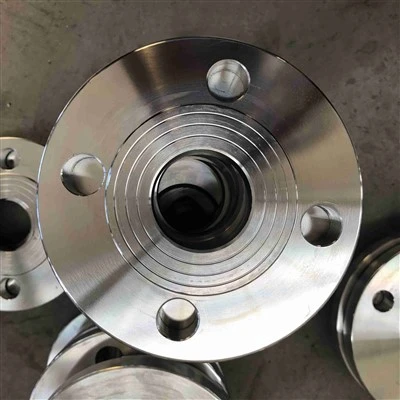
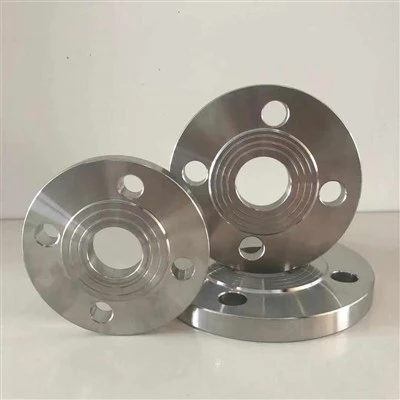
Concentrated Sealing Stress: The "Raised Face" (RF) features a small platform elevated 1/16-inch or 1/4-inch above the outer bolt circle. When the bolts are torqued, the entire clamping force is focused directly onto this smaller surface area, maximizing gasket compression and preventing micro-leakages under minor thermal expansion or system vibration.
Lower Initial Material Costs: It uses less raw material weight during forging than a heavy, long-tapered welding neck option, making it a highly cost-effective choice for procurement managers sourcing components for large-scale projects.
Manufacturing Process & Craftsmanship
Producing a high-quality component requires strict adherence to international metallurgical standards to ensure it withstands industrial stresses without cracking.
Forging (The Core Phase): Raw steel billets (commonly ASTM A105 carbon steel or ASTM A182 stainless steel) are heated to extreme forging temperatures and shaped under heavy hydraulic presses. This refines the internal grain structure of the metal, granting it far superior impact and fatigue resistance compared to cheap cast alternatives.
Precision Machining: Computer Numerical Control (CNC) lathes precisely bore out the inner diameter to match standard tube tolerances, drill the bolt circles, and machine the critical raised face.
Surface Serration Finishing: The raised face is finished with a continuous or concentric spiral groove (smooth or stock finish, typically 125–250 AARH). These tiny serrations bite into the gasket material upon installation, creating a robust, gas-tight mechanical seal.
Global Industry Insights
The global industrial sector is experiencing a significant shift toward standardized, modular factory assembly, which is driving a steady increase in demand for adaptable connection components. Furthermore, international environmental regulations targeting fugitive emissions have forced plants to phase out older Flat Face (FF) connections in favor of Raised Face (RF) geometries to guarantee tighter sealing. As emerging markets scale up their water desalination plants and clean energy refining infrastructure, this component continues to be a top-tier procurement priority for piping engineers worldwide.