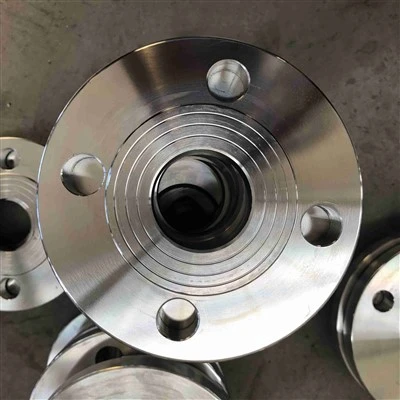
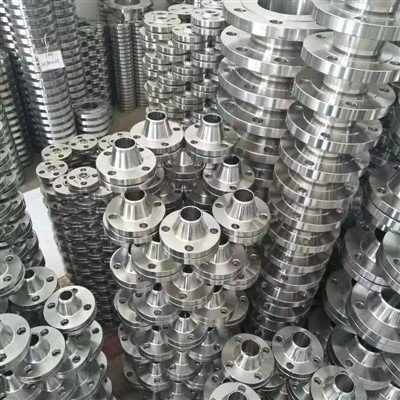
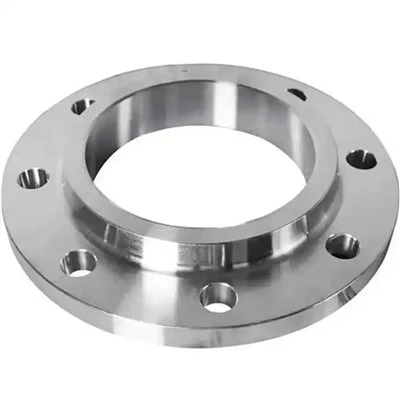
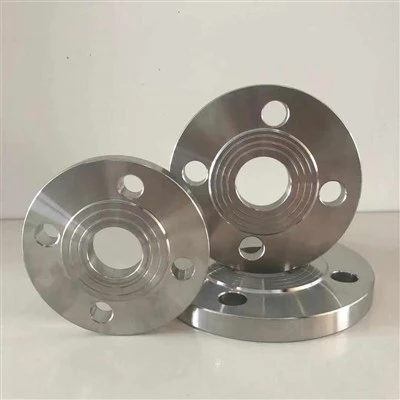
In the assembly and maintenance of industrial fluid networks, field welding hours and tight joint seals are critical metrics directly impacting overall project costs. Especially during facility retrofits and low-pressure pipeline upgrades, working inside tight valve manifolds and restricted hot-work zones requires shortening the structural preparation phase. To address these operational constraints, mechanical engineering specifications for 2026 process lines are increasingly standardizing on the flange slip on ansi 150 (ASME B16.5 Class 150 Raised Face Slip-On Flange) as the primary connection method for utility and utility-process configurations.
Forgiving Tolerances vs. Rigid Weld-Neck Alignment
Standard welding neck options offer high performance under extreme pressures, but their physical design requires a meticulous preparation process. Weld-neck styles demand a precise V-bevel or U-bevel pipe-end preparation, and the internal bore of the flange hub must match the exact pipe schedule (such as Sch 40 or Sch 80). On complex vertical pipe racks or elevated scaffolding, maintaining these strict alignment tolerances can be difficult due to pipe ovality or minor gravitational sag, which delays the initial fit-up phase.
The ASME B16.5 150-lb slip-on configuration provides significantly higher physical tolerance during field fit-up. The internal bore diameter is machined slightly larger than the outside diameter of the matching steel pipe (for example, a 2-inch or 4-inch nominal size). During assembly, the pipe slides directly into the hub of the flange, stopping slightly short of the flange face. Welders secure the connection using a dual-pass fillet weld layout-one on the exterior hub and a second internally at the pipe end. This geometry entirely eliminates the need for precision end-beveling. Field installation data from modular prefabrication yards shows that shifting to this slip-on configuration reduces average joint preparation time by 40% and cuts total manual labor hours by approximately 25%.
Clamping Performance Under Standard Operating Pressures
Regarding pressure and sealing capabilities, the ANSI Class 150 rating-which handles a maximum allowable working pressure of roughly 285 psi (1.96 MPa) at ambient temperatures-works in tandem with the Raised Face (RF) geometry to prevent joint failures. The 1/16-inch raised platform focuses the total bolt torque directly onto the localized gasket area.
When this concentrated clamping force is applied to a standard phonographic serrated finish (typically 125–250 AARH grooves), the gasket bites firmly into the steel face. This creates a mechanical seal capable of absorbing minor thermal expansion, environmental temperature swings, and the continuous low-amplitude vibrations caused by upstream pumping systems, successfully preventing micro-leakages of utility fluids, compressed air, industrial water, and low-pressure hydrocarbons.
Material Versatility for Modern Skid Fabrication
As international engineering and construction firms prioritize modular skid building and factory-controlled prefabrication, raw material versatility has become vital for supply chain optimization. Because a specific nominal size slip-on flange fits over the outside diameter of a pipe regardless of its internal wall thickness, it can be paired with multiple pipe schedules. This compatibility significantly reduces individual stock-keeping unit (SKU) counts in procurement warehouses. For mid-pressure process setups that experience continuous service cycles but remain within standard ASME thermal limits, this practical component provides a reliable, code-compliant connection that helps operators minimize downtime and safely maintain full plant throughput.