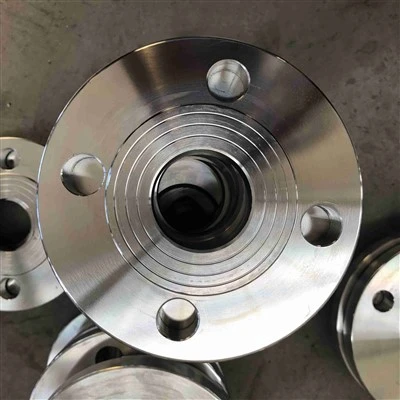
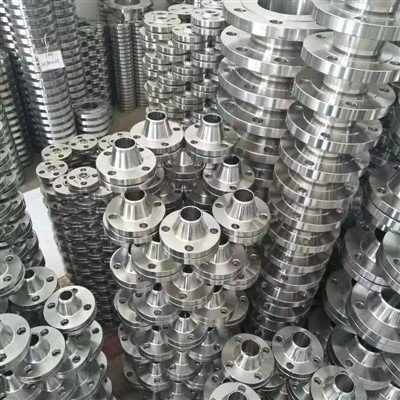
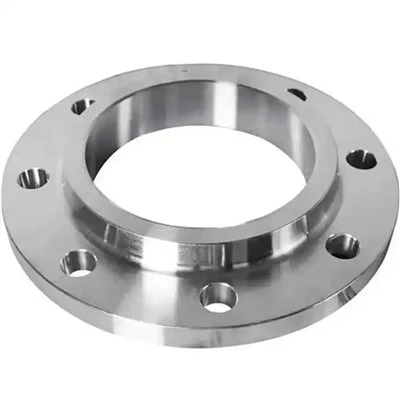
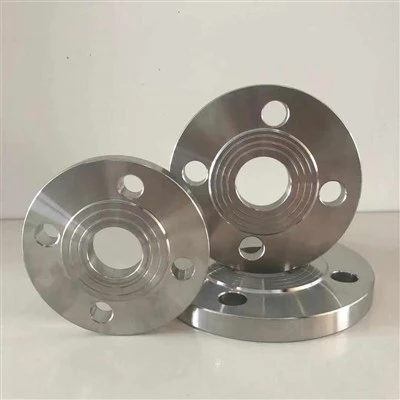
The international industrial pipeline market is undergoing a significant procurement shift. Driven by tight project schedules and a critical shortage of certified specialized welders, mechanical contractors are moving away from traditional weld-neck setups for mid-pressure lines. Recent industrial supply chain intelligence reveals that global procurement for the slip on forged steel flange has maintained a compound annual growth rate (CAGR) of 5.8% over the past three years, with total segment valuation projected to surpass $4.2 billion by the end of 2027.
Forging Integrity vs. Cast Vulnerabilities
The primary driver behind this steady market increase lies in the mechanical reliability resulting from the forging process. Unlike cast components-which frequently exhibit internal porosity, micro-voids, and a higher risk of cracking under pressure-forged steel flanges are manufactured by compressing raw steel billets under heavy hydraulic presses. This directional pressure refines the grain flow of the metal, ensuring it mirrors the exact shape of the flange.
This dense internal structure ensures the component handles sudden fluid pressure spikes and continuous pipeline vibrations caused by upstream pumping systems without developing structural micro-cracks over extended service periods.
Streamlining On-Site Fit-Up to Cut Labor Hours
From an operational perspective, the slip-on design directly solves the current skilled labor gap. A traditional weld-neck setup requires perfect longitudinal alignment, precise root gaps, and matching wall thicknesses (schedules) between the pipe and the flange hub. This creates an unforgiving environment for field technicians working on elevated scaffolding or within cramped vertical pipe racks.
The structural geometry of a slip-on component eliminates these hurdles. Designed with an internal bore slightly larger than the outside diameter of the matching pipe, the flange simply slides onto the tube section. Welders secure the connection using dual-pass fillet welds-one on the exterior hub and another internally near the pipe face. According to field installation metrics from major European EPC firms, this configuration eliminates the need for precision pipe-end beveling, reducing average joint preparation time by 35% and overall field assembly hours by up to 25%.
Key Application Verticals and Growth Metrics
These practical characteristics make the component indispensable across several core industrial sectors, each experiencing distinct volume growth:
Modular Skid Construction: Engineering firms specializing in turnkey oil, gas, and water filtration skids utilize these components to assemble compact valve blocks and instrumentation loops. This sector has seen a 14% year-over-year increase in component adoption due to the rising popularity of pre-fabricated industrial modules.
Refinery Retrofits and Overhauls: During scheduled turnarounds, maintenance crews rely on the forgiving alignment tolerances of slip-on joints to rapidly replace degraded piping spools in complex networks.
HVAC and Industrial Utilities: High-capacity chilled water lines, fire protection systems, and factory compressed air distribution networks rely heavily on these connections for long-term operational safety.
As automation and modular prefabrication continue to reshape the construction landscape, the demand for reliable, fast-installing pipeline components remains high. By combining the solid metallurgy of a forged structure with the practical assembly advantages of a slip-on design, this essential connector continues to help asset managers minimize downtime, satisfy environmental compliance, and secure full plant operational capacity.