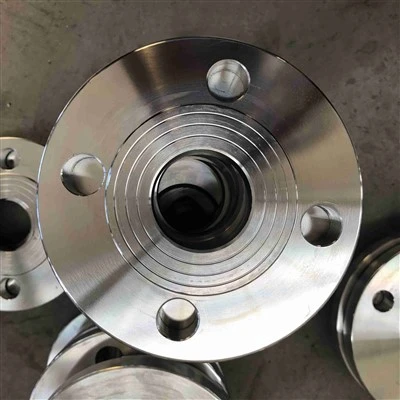
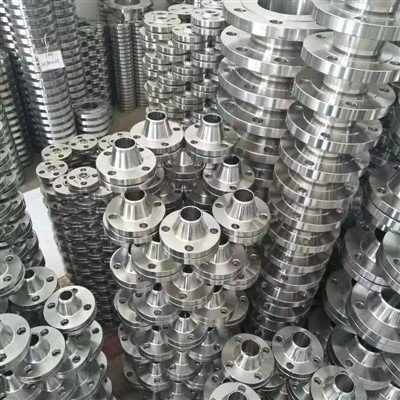
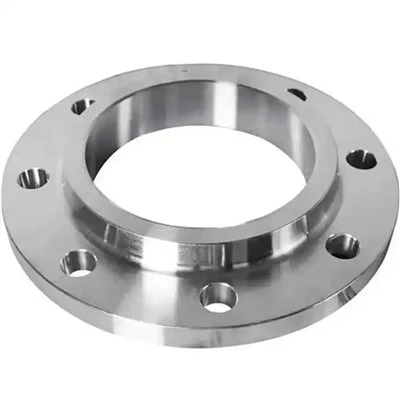
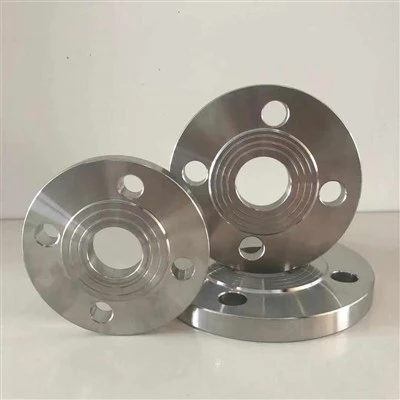
Correct installation of a plate flange for welding depends on dimensional verification, pipe preparation, alignment, welding control, and final inspection. Before work begins, confirm the flange material, bore, thickness, bolt pattern, sealing face, and compatibility with the adjoining pipe and mating component. The plate flange for welding should be reviewed together with the stated application and order requirements.
The pipe end should be cut square and cleaned to remove rust, oil, paint, moisture, and loose material. The flange is then positioned at the required distance and orientation. Bolt holes should be aligned with the mating connection and with the project installation direction before tack welding.
A plate flange for welding must remain square to the pipe axis. Angular or lateral misalignment can create difficulty during bolting, uneven gasket compression, and additional load on the pipeline. Temporary supports, clamps, and measuring tools can hold the component in position while tack welds are placed.
The welding procedure should match the flange and pipe materials, thicknesses, joint arrangement, and service conditions. Weld size, sequence, heat input, and interpass cleaning need to follow the approved fabrication requirements. Opposed or balanced welding sequences can help control distortion on suitable assemblies.
After welding, inspect alignment, sealing-face condition, bolt-hole position, visible weld quality, markings, and surface protection. The gasket surface should remain free from weld spatter and mechanical damage. Any coating repair should be completed after inspection.
Accurate dimensions and controlled welding allow a plate flange for welding to connect reliably with valves, pumps, tanks, equipment nozzles, and adjoining pipe sections. Proper preparation also reduces fitting corrections and bolt-alignment problems during final assembly.